
Quran Learning for Kids
Noorani Qaida for Kids: At What Age to Start, How Long It Takes, and What Your Child Learns
· Kalamullah Online Academy
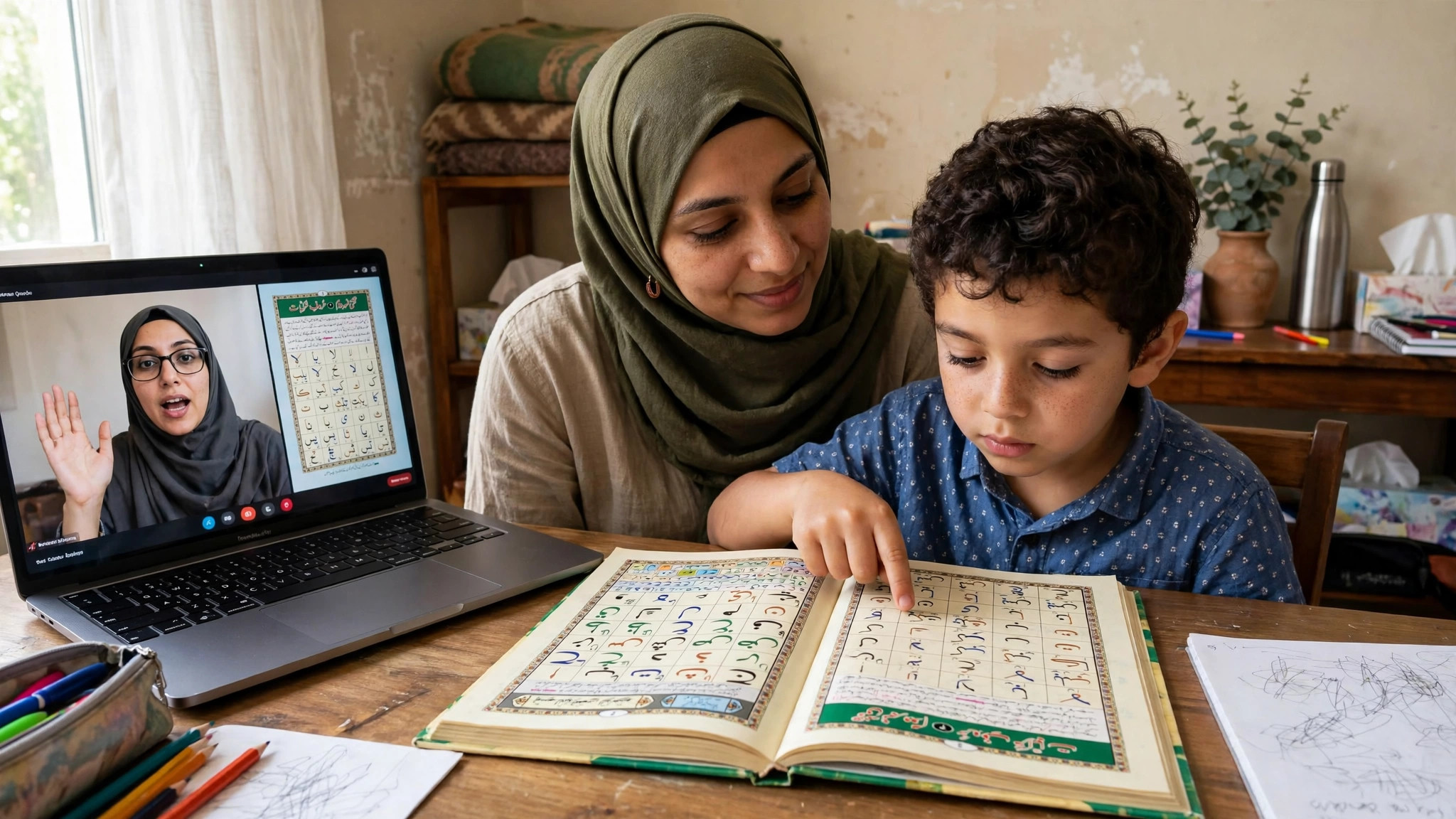
Many parents want their child to read the Quran, but they are not sure where to begin. Starting directly from the Mushaf is hard for a young child, because the letters, joined shapes and small vowel marks are all new at once.
Noorani Qaida solves this problem. It is the beginner book that teaches a child the Arabic letters and their sounds first, in a clear order, before Quran reading begins. This guide explains the right age to start, how long it usually takes, and what your child learns at each stage.
Quick Answer
Most children can start Noorani Qaida between the ages of 4 and 7, once they can sit for a short lesson and repeat sounds after a teacher. With regular classes and a few minutes of practice at home, many children finish in several months to about a year. The exact time depends on age, class frequency, practice and how familiar the child already is with Arabic sounds.
What is Noorani Qaida and why does it come before the Quran?
Noorani Qaida, also spelled Qaidah Nooraniyah in some editions, is a small primer book used for generations to teach the basics of Arabic reading. It does not teach translation or meaning. Its single job is to help a child recognise letters and pronounce sounds correctly.
A child who completes the Qaida well can open the Quran and read words slowly, instead of guessing them. That is why teachers treat it as the foundation stage. Skipping it often makes later Quran reading slower and full of repeated mistakes that are harder to fix.
At what age should a child start Noorani Qaida?
There is no single correct birthday for starting. A better question is whether your child is ready. Readiness usually means the child can sit and focus for a short lesson, listen to a sound and repeat it, and enjoy copying what the teacher says.
Many children are ready at 4 or 5, especially with short, playful lessons. Children who start at 7 or older usually move faster, because they can focus for longer and understand instructions more easily. Starting a little later is not a problem, and starting early only helps if the lessons stay gentle and regular.
The table below gives a general guide. It is an estimate for planning, not a promise, because every child learns at a different pace.
| Age group | Typical focus | Lesson length guide | Expected pace |
|---|---|---|---|
| 4 to 6 years | Letters, sounds and listening | Short lessons, about 20 to 30 minutes | Slower and playful, with lots of repetition |
| 7 to 10 years | Joined letters and reading rules | About 30 to 45 minutes, as focus allows | Steady, often faster than younger children |
| 11 years and above | Full Qaida with accuracy checks | About 45 minutes, based on attention | Often quicker, if practice stays regular |
Lesson length is general guidance only. At Kalamullah Online Academy, online Quran classes for kids are 1-on-1 with flexible scheduling, so the teacher can adjust the pace and length to your child’s attention and your family routine.
What does your child learn in Noorani Qaida?
Most printed editions of Noorani Qaida contain 17 lessons. Editions and teachers group them slightly differently, but the learning order is almost always the same. Your child moves through five broad stages.
Stage 1: The Arabic letters and their sounds
Your child first learns the single Arabic letters, their names and their correct sounds. The teacher pays close attention to where each sound comes from, so similar letters are not mixed up. This stage builds the habit of clear pronunciation from the very beginning.
Stage 2: Joined letters and changing shapes
Arabic letters change shape when they join together in a word. In this stage, your child learns to recognise each letter at the start, middle and end of a word. This is the step that makes real words readable, instead of only single letters on a page.
Stage 3: Harakat, the short vowel marks
Next come the small marks that sit above or below a letter: fatha, kasra and damma. Your child learns how each mark changes the sound of a letter, and practises reading short combinations aloud. Lessons stay slow and repetitive here, because accuracy matters more than speed.
Stage 4: Tanween, sukoon and longer sounds
Your child then meets tanween, the double vowel marks that add an ending sound, and sukoon, which shows a letter with no vowel. Longer sounds and stretching rules are introduced in simple form. Reading becomes smoother, and words begin to sound connected rather than broken.
Stage 5: Shaddah and basic reading practice
In the final stage, your child learns shaddah, which doubles a letter's sound, and practises reading longer lines that combine everything learned so far. By the end, most children can read simple Arabic words and short lines slowly and correctly, which is exactly what early Quran reading requires.
A good teacher will not rush a child through these stages to finish the book quickly. If one stage is weak, the next stage becomes difficult. Short revision at the start of each lesson is what turns new sounds into lasting reading skills.
How long does Noorani Qaida take for kids?
Parents often ask for an exact finishing date, but an honest answer can only be a range. As a cautious guide, a child who attends regular classes two or three times a week and practises for a few minutes on other days often completes Noorani Qaida in several months to about a year.
Younger children, children who attend once a week, and children with long breaks usually need longer. Older children who practise daily can sometimes move faster. None of these timelines is guaranteed, and a teacher should never promise one.
These factors make the biggest difference:
- Age and attention: younger children need shorter lessons and more repetition.
- Class frequency: two or three short classes a week usually hold progress better than one long class.
- Home practice: even five to ten minutes of revision between classes keeps sounds fresh.
- Starting point: a child who already hears Arabic or Quran recitation at home may recognise sounds sooner.
- Breaks: long holidays without any reading can send a child back several lessons.
What does a 1-on-1 online Noorani Qaida lesson look like?
In a 1-on-1 online lesson, your child has the teacher's full attention for the whole class. A typical lesson begins with revision of the previous page, so the teacher can check that earlier sounds are still correct before teaching anything new.
The teacher then introduces the new letters or rule for the day, says each sound clearly, and asks your child to repeat it several times. Your child reads from the Qaida page while the teacher listens, corrects mistakes straight away and marks what needs more practice.
At Kalamullah Online Academy, the Noorani Qaida course is taught by qualified male and female teachers, and parents can choose flexible scheduling around school and family life. A short update at the end of the lesson helps you know exactly what your child practised and what to revise at home.
How can parents help at home?
You do not need to know Arabic yourself to support your child. Small, regular help from parents makes a clear difference when you are teaching Quran to children at home:
- Keep practice short. Five to ten minutes a day is better than one long session once a week.
- Ask your child to read the current Qaida page aloud to you, even if you only listen and encourage.
- Use the teacher's notes. Revise only what the teacher has already taught, so you do not introduce mistakes.
- Keep the same time each day, such as after school or before bed, so practice becomes a habit.
- Praise effort and accuracy, not speed. A child who feels rushed will guess instead of reading carefully.
- Tell the teacher if your child is finding a sound difficult, so extra time can be given in the next lesson.
Common mistakes that slow down Qaida progress
Most delays in Qaida progress come from a few common, avoidable mistakes:
- Moving to the Quran too early, before joined letters and vowel marks are secure.
- Irregular classes, with long gaps that make a child forget earlier lessons.
- Correcting pronunciation at home without training, which can teach the wrong sound.
- Comparing a child with a sibling or classmate who started earlier or learns faster.
- Skipping revision and only ever moving forward to new pages.
- Choosing long, tiring lessons for a young child instead of short, regular ones.
How do you know your child is ready to read the Quran?
Your child is usually ready to move from Noorani Qaida to Quran Reading with Tajweed when most of these signs are present:
- They recognise letters quickly in all their joined shapes, without long pauses.
- They read lines with fatha, kasra and damma correctly, without guessing the marks.
- They apply tanween, sukoon and shaddah in practice lines with only occasional slips.
- They can read a new Qaida line they have not memorised, not only pages they have repeated.
- They sit through a lesson and read steadily for most of it.
The final decision should be the teacher's, based on how your child reads an unseen page. Moving up a few weeks later, with a strong foundation, is almost always better than moving early and struggling with every line of the Quran.
Frequently asked questions
Can my child start Noorani Qaida if they do not know any Arabic?
Yes. Noorani Qaida is designed for complete beginners, including children who have never seen Arabic letters before. The teacher starts from the first letter and builds up slowly, so no previous knowledge is needed.
Does my child need a printed Qaida book for online classes?
A printed copy is helpful for home practice, because your child can revise the same page between lessons. During the online lesson, the teacher can also share the page on screen, so a book is useful but not a barrier to starting.
Can my daughter learn with a female teacher?
Yes. Kalamullah Online Academy has qualified female teachers as well as male teachers, and many parents choose a female teacher for their daughters. You can share your preference when you book, and the academy will guide you.
What if my child is shy or will not sit still on camera?
This is common with young children, and experienced teachers handle it with short activities, repetition and patience. Starting with shorter lessons and a regular routine usually helps a shy or active child settle within a few weeks.
Can two siblings take Noorani Qaida lessons together?
Siblings can start at the same time, but 1-on-1 lessons usually work better because each child moves at a different pace. Separate lessons let the teacher give each child the correction and revision they personally need.
What happens if we miss a class or go on holiday?
Tell the academy as early as you can, and keep a few minutes of reading going during the break if possible. When classes restart, the teacher will revise the last lessons first, so your child does not continue with forgotten sounds.
Should my child finish the Qaida before memorising short surahs?
The two can run side by side. Many children enjoy memorising short surahs by listening and repeating while they are still learning to read. Reading the Qaida well will later make memorisation from the Mushaf easier and more accurate.
My child is 11. Is it too late to start Noorani Qaida?
No, it is not too late. Older children often complete the Qaida faster because they can focus longer and understand rules more quickly. Starting at 11 with regular practice still builds a strong foundation for Quran reading.
Conclusion
Noorani Qaida is a small book, but it decides how confidently your child will read the Quran for years to come. Start when your child can sit, listen and repeat, keep lessons regular, and let the teacher judge readiness for the next stage instead of rushing to finish, whether that next stage is fuller Quran reading or short surahs for kids to memorize.
If you would like to see how your child responds to a lesson, you can book a free trial class with Kalamullah Online Academy and speak to us on WhatsApp at +92 301 4825808. There is no pressure to continue, and the trial will show you your child’s current level and the right next step.
- Noorani Qaida
- Quran for Kids
- Online Quran Classes
- Kids Quran Learning
- Arabic Letters for Kids
- Parent Guide
- Beginner Quran