
Islamic Education
Learning the Quran Online: A Path for Every Muslim
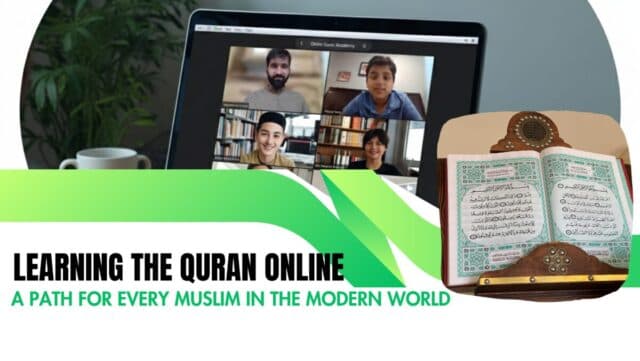
For millions of Muslim families around the world, teaching their children to read and understand the Quran is not just a priority; it is a responsibility they carry with deep love and quiet worry. Getting that right matters more than almost anything else.
Online Quran learning has emerged as a powerful solution. With qualified teachers, interactive tools, and flexible schedules, it provides a path for every Muslim regardless of location, age, or background.
For generations, quality Quranic education depended heavily on where a family happened to live, whether that was near a well-established mosque, close to a knowledgeable relative, or in a community large enough to support a proper madrasa. Families in smaller towns, non-Muslim-majority countries, or simply with demanding work schedules often had no realistic access to consistent, qualified instruction, no matter how much they valued it.
Online platforms have changed that equation entirely. A single video connection now puts a qualified teacher directly into a family's living room, removing the need for proximity altogether. This shift benefits parents managing complicated schedules just as much as it benefits students, since one-on-one sessions replace the unpredictability of sporadic group classes with steady, personalized instruction.
The practical gains are obvious, no commute, no scheduling around someone else's availability, no missed weeks because of weather or travel, but the deeper gains matter more. Sustained, personalized instruction produces real, measurable improvement in recitation quality, Tajweed accuracy, and memorization retention over time, especially compared with irregular attendance at a crowded weekend class.
Free videos and apps have their place, but they cannot replace a live teacher. Tajweed in particular depends on a human ear catching a specific mispronunciation in the moment and correcting it before it becomes a habit, a kind of feedback no recorded lesson can offer. This mirrors how the Quran has always been taught, through direct, personal transmission from a knowledgeable teacher to a student, not through passive consumption of content.
A well-run academy reflects this by carefully selecting instructors and prioritizing real personal attention over volume. Good programs serve every kind of learner, from a four year old just learning their letters to a teenager working on fluency, an adult starting from scratch, or a dedicated student pursuing full memorization, with both male and female certified teachers so every family's preference is respected.
Because sessions are one-on-one, a teacher's full attention goes to a single student rather than being divided across a room of learners moving at different speeds. That focus alone often turns Quran study from an obligation into something a child genuinely looks forward to, particularly for younger learners who thrive on individual encouragement.
None of this diminishes the value of Tajweed or treats it as optional; scholars have always considered proper recitation a serious responsibility, not a decorative extra. Even someone who has recited informally for years stands to benefit from corrective instruction, and a good teacher delivers that correction with patience rather than criticism.
Scheduling flexibility removes one of the last remaining excuses for delay. With teachers available across time zones and session times ranging from early morning to evening, distance and busy calendars no longer stand in the way of starting. Adult learners in particular often carry quiet hesitation about beginning later in life, and classes designed specifically for adults, paced thoughtfully and scheduled around work, exist precisely to remove that hesitation.
The barriers that once kept quality Quranic education out of reach for so many families have largely fallen away. What remains is a simple decision: to take the first step, book a trial class, and experience personalized instruction built around your family's own pace and needs.