
Islamic Education
How Long Does It Take to Learn Quran with Tajweed? A Realistic Timeline for Kids and Adults
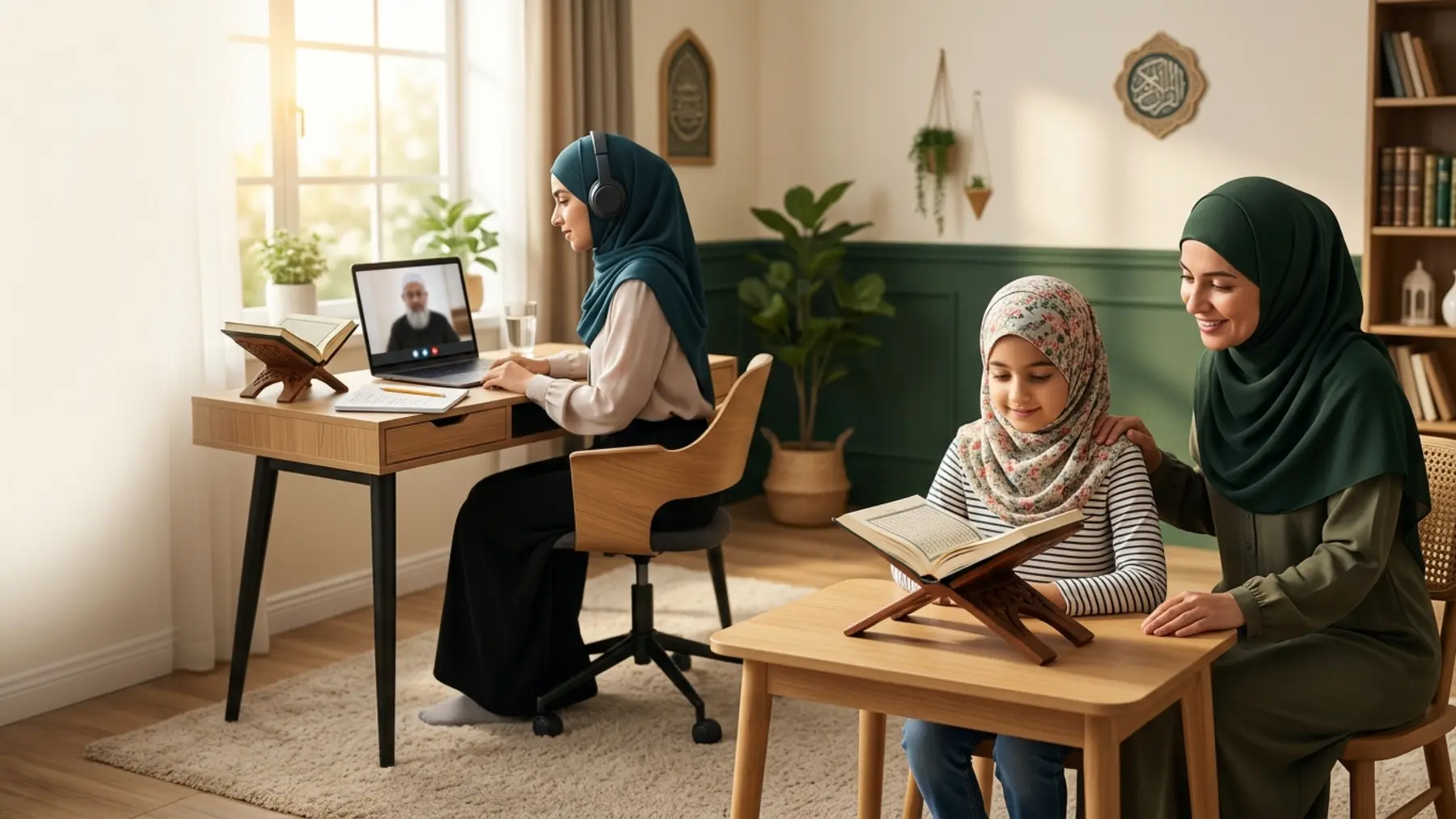
If you are planning Quran classes for your child or returning to the Quran as an adult you probably want an honest timeline before you begin. The difficulty is that "learning Quran with Tajweed" can mean several different things. Recognizing Arabic letters is one milestone; reading connected words is another. Understanding Tajweed rules, applying them with a teacher, and reciting a new page independently are also different goals.
For this reason, there is no responsible one-size-fits-all completion date. An existing reader may improve the application of core Tajweed rules within several months, while a complete beginner may need a year or longer to build both reading and recitation skills. This guide explains practical planning ranges, the factors that change them, and the milestones parents and adult learners can use to measure real progress.
Quick Answer
As a broad planning estimate, an existing Quran reader may need about 3-9 months to improve core Tajweed application, while a complete beginner may need roughly 6-18 months to build foundational reading and functional Tajweed. Confident, more independent recitation often requires continued guided practice beyond that. Advanced refinement and Ijazah preparation are multi-year, teacher-assessed paths. Individual progress can be shorter or longer.
First Define What "Learning Quran with Tajweed" Means
Tajweed is the disciplined practice of reciting the Quran with correct letter articulation and relevant recitation rules. Makharij are the articulation points from which Arabic letters are produced. Sifaat are the characteristics of those letters. Other foundational areas include madd (elongation), ghunnah (nasal sound), qalqalah (echoing quality in specific letters), rules related to noon sakinah and meem sakinah, and appropriate stopping and starting.
Learning the names of these rules is not the same as using them correctly while reciting. A useful timeline must therefore identify a measurable finish line: rule awareness, where the learner can recognize and explain selected rules; guided application, where the learner applies rules with regular teacher prompts; functional accuracy, where the learner reads familiar passages with fewer recurring errors; independent transfer, where the learner applies the same skills to a new passage and can correct some mistakes independently; and advanced refinement, where the learner works on precision, consistency, stopping, recitation quality, and advanced study under close supervision.
Allah instructs believers to recite the Quran in a measured manner in Surah Al-Muzzammil 73:4. This supports a quality-first approach: progress should not be judged only by how quickly a page is completed.
A Realistic Timeline by Starting Level
The following ranges synthesize the useful patterns across the supplied Quran-education sources. They are planning estimates, not published research statistics or guaranteed outcomes.
A complete beginner, aiming to recognize letters, connect them, read simple words, and begin correct pronunciation, can plan for about 1-4 months, though some learners need longer since letter knowledge alone is not fluent Quran reading. A Qaida learner or slow reader, building functional Quran reading while learning core Tajweed through correction, can plan for about 6-12 months, with progress depending heavily on attendance, practice, and reading foundation. A fluent reader with limited Tajweed training, correcting recurring makhraj errors and applying core rules more consistently, can plan for about 3-9 months, though established habits may require focused correction. A functional reader seeking greater independence, transferring rules to unfamiliar passages, reducing prompts, and improving flow, can plan for about 6-18 additional months, with accuracy and independence assessed across varied passages. An advanced learner or Ijazah candidate, refining full-recitation accuracy under an authorized teacher, faces a multi-year and highly variable path, since Ijazah is granted on demonstrated standard, not elapsed time.
These stages can overlap. A good teacher may introduce correct pronunciation and simple Tajweed from the beginning rather than postponing every rule until after Qaida. What matters is that the learner is not expected to manage advanced rules before basic reading is stable.
The Learning Path from Foundation to Confident Recitation
1. Starting-Level Assessment
A useful assessment checks letter recognition, connected-letter reading, short vowels, common pronunciation errors, fluency, rule awareness, and the ability to repeat a correction. It should also ask what the learner wants: reading for daily recitation, improving Salah, preparing for Hifz, refining an existing recitation, or pursuing advanced study.
2. Noorani Qaida or Reading Foundation
Complete beginners normally need a structured foundation before they can apply Tajweed across a Quran page. Noorani Qaida commonly introduces letter forms, joining, vowels, sukoon, shaddah, and basic sound patterns. The goal is not simply to finish the book. The learner should be able to transfer the reading skills to unfamiliar words.
3. Makharij and Core Rules
At this stage, the teacher identifies recurring pronunciation issues and introduces rules in manageable groups. Learners often understand a rule before their tongue can apply it smoothly. Repetition, listening, and immediate correction turn knowledge into a recitation skill.
4. Guided Quran Reading
The learner reads directly from the Mushaf while the teacher corrects errors, explains patterns, and revisits weak areas. Frequent corrections are not a sign of failure. They provide the information needed to prevent the same mistake from becoming a habit.
5. Functional, More Independent Recitation
Progress becomes visible when the learner can read a new passage with fewer prompts, maintain reasonable accuracy while concentrating on meaning, and notice some of their own recurring errors. This is a more useful milestone than merely completing a fixed number of lessons.
6. Advanced Refinement or Ijazah Preparation
Advanced study is separate from beginner Tajweed. It may involve a detailed reading of the full Quran, greater precision in makharij and sifaat, stopping and starting, a specific riwayah (transmission), and sustained evaluation by an appropriate teacher. An Ijazah should never be promised according to a marketing deadline.
Timeline Considerations for Children
Children benefit from short, predictable lessons, imitation, repetition, visual cues, and positive correction. A young learner may reproduce a sound well but still need time to understand or remember the rule behind it. School schedules, attention span, family support, and the consistency of revision may affect progress more than age alone.
For a child starting from the beginning, parents can plan broadly for 6-18 months to develop a reading foundation and begin applying core Tajweed with guidance. This is not a promise of fluency. A child who already reads Arabic may reach the same milestone sooner, while a child who needs shorter sessions, additional pronunciation support, or frequent breaks may need longer.
Parents should track whether the child can recognize and join letters without guessing, repeat corrected sounds accurately, read a short new passage rather than only a memorized lesson, remember previously studied patterns, stay engaged without being rushed or shamed, and make steady progress across several weeks.
Timeline Considerations for Adults
Adults can learn Quran and Tajweed successfully at any age. They often bring strong motivation, the ability to understand explanations, and better control over study goals. Their main challenges may be limited time, tiredness after work, long gaps between lessons, or pronunciation habits learned years earlier.
A complete adult beginner can use 9-18 months as a cautious planning range for building foundational reading and functional application of core Tajweed, assuming regular lessons and practice. An adult who already reads the Quran may focus on correction and core rule application over approximately 3-9 months, then continue toward greater independence and refinement.
The Prophet Muhammad taught that the person who finds Quran recitation difficult while persevering receives two rewards (Sahih Muslim 798a; also narrated in Sahih al-Bukhari 4937). Difficulty is therefore not a reason for embarrassment. It is a reason to continue with patience, accurate correction, and sincere effort.
What About Non-Arabic-Speaking Learners?
You do not need to speak Arabic fluently before learning to read the Quran. However, non-Arabic-speaking learners may be developing two skills at once: decoding an unfamiliar script and producing sounds that may not exist in their everyday language.
It is helpful to separate three goals: reading, which means recognizing and pronouncing the written Arabic text; recitation with Tajweed, which means applying correct articulation and recitation rules; and understanding, which means learning vocabulary, translation, Arabic, and Tafseer.
These goals support one another, but they should not be combined into a single timeline. A person can improve Quran reading before becoming fluent in Arabic, while deeper understanding requires a separate study plan.
Factors That Shorten or Extend the Timeline
Starting level
A learner who can already read connected Arabic has a different task from someone learning the alphabet. A returning learner may also need to correct habits before moving forward.
Consistency between lessons
Short practice on most days usually gives the teacher something stable to build on. Long gaps make it easier to forget corrections. Consistency matters, but the practice must be accurate; repeating the wrong sound is not productive practice.
Lesson frequency and live feedback
Regular lessons provide more opportunities for correction and accountability. The right frequency depends on the learner's age, concentration, budget, and schedule. A plan that can be sustained for months is more useful than an intensive timetable that quickly collapses.
Clear focus
A learner improves more efficiently when each session has a defined target, such as one articulation point, one rule, or one recurring error. Trying to fix every aspect of recitation at once can be overwhelming.
Audio and learning environment
Online learning depends on a quiet room, clear microphone, stable connection, and a device positioned so the learner can see the text and teacher. Poor audio can make subtle correction harder.
Individual needs
Hearing differences, speech needs, confidence, attention, language background, and previous learning experiences can all affect the plan. These differences call for patience and appropriate teaching not comparison or shame.
Sample Practice Plans for Kids and Adults
A young child following short lessons three to five days weekly, where suitable, can pair this with 10-15 minutes of between-lesson practice with a parent or audio model, focusing on letters, sound imitation, short reading, and positive repetition. A school-age child attending 3-5 structured lessons weekly can add 10-20 minutes of practice on most days, focusing on Qaida transfer, makharij, core rules, and confidence. A busy adult beginner taking 2-4 lessons weekly can add 15-25 minutes of practice on most days, focusing on reading foundation, difficult sounds, and guided recitation. An existing adult reader taking 2-3 focused lessons weekly can add 15-30 minutes of practice on most days, focusing on error correction, rule application, and new passages.
These are sample routines rather than prescriptions. The best schedule is one the learner can maintain while remaining attentive.
A Simple 20-Minute Tajweed Practice Routine
Listen for two minutes
Review the teacher's model for the day's sound or passage.
Warm up for four minutes
Repeat the target letters, makhraj, or rule slowly.
Read for eight minutes
Practise a short assigned passage aloud with accuracy before speed.
Record for three minutes
Listen once and mark one or two possible errors.
Review for three minutes
Repeat the corrected section and note a question for the next lesson.
For younger children, reduce the routine to 10-15 minutes and use smaller tasks. Stop before fatigue turns practice into frustration.
Why a Live Teacher Matters and Where Apps Help
Books, videos, recordings, and apps can explain rules, model recitation, and support revision. They are valuable practice tools. Their limitation is that they may not reliably identify the learner's exact articulation error or explain how to correct it.
A live teacher can listen, isolate the issue, demonstrate the sound, and check whether the correction transfers into actual recitation. One-to-one instruction can also adapt the pace and lesson focus to the learner. Technology should therefore support feedback, not replace it entirely.
Kalamullah Online's official website describes personalized one-to-one online Quran classes for children and adults, male and female teachers, flexible scheduling for international learners, and progress monitoring. Its Quran Reading with Tajweed course includes pronunciation, makharij, core Tajweed rules, fluency development, and error correction.
Common Mistakes That Delay Progress
Chasing speed before accuracy
Faster reading can hide recurring pronunciation errors.
Memorizing definitions without reciting
Tajweed must be applied aloud.
Practising only during class
The learner has too little repetition between corrections.
Skipping the reading foundation
Advanced rules cannot compensate for uncertain letter recognition.
Changing teachers or resources too frequently
Every change may interrupt the learning sequence.
Comparing a child with siblings or an adult with online examples
The starting point and available practice time may be different.
Treating Hifz as proof of Tajweed mastery
Memorization and recitation accuracy are related but separate skills.
Assuming a completed course means permanent mastery
Recitation needs ongoing use, review, and correction.
How to Choose a Suitable Tajweed Teacher
Ask practical questions before enrolling. Will the teacher assess the learner's current reading and pronunciation? Can the teacher demonstrate and explain corrections clearly? Is the teaching method appropriate for a child, adult, or non-Arabic speaker? Does the plan define measurable milestones rather than promise a fixed finish date? How will progress, recurring errors, and revision be recorded? Can the learner choose a male or female teacher where needed? Does the class technology provide clear, interruption-free audio? If advanced study or Ijazah is the goal, is the teacher authorized for the relevant recitation path, and can that authorization be verified?
An Ijazah can document that a learner recited a defined text or recitation to an authorized teacher at an accepted standard. It should not be treated as an automatic guarantee of teaching skill, child-friendly communication, or suitability for every student. Both recitation credentials and teaching ability matter.
A Milestone Checklist That Is Better Than a Deadline
Use this checklist during monthly reviews. The learner is making meaningful progress when they can increasingly recognize letters and common joining forms, produce target sounds after fewer prompts, read unfamiliar words rather than relying on memory, identify selected Tajweed patterns in the Mushaf, apply core rules in familiar and new passages, respond to correction and repeat the sound accurately, maintain accuracy at a calm, manageable pace, use basic stopping points appropriately, notice and correct some recurring errors, and explain the next personal goal clearly.
Record a short passage once a month, with the teacher's permission, and compare the same skills over time. Progress is often easier to hear across several weeks than from one day to the next.
Conclusion
So, how long does it take to learn Quran with Tajweed? For an existing reader, several months may produce meaningful improvement in core rules and recurring errors. For a complete beginner, building reading foundations and functional Tajweed may take roughly 6-18 months or longer. Independent consistency, advanced refinement, and Ijazah preparation require continued study beyond an introductory timeline.
The most useful question is not "How quickly can I finish?" but "What is my current level, what is my next measurable milestone, and what routine can I sustain?" A clear assessment, suitable teacher, regular correction, and short consistent practice create a more honest path than any guaranteed completion date.
If you would like a clearer estimate for yourself or your child, book a free trial with Kalamullah Online. A one-to-one starting-level assessment can help identify the right course, teacher preference, learning milestone, and practical schedule without assuming that every learner should progress at the same pace.
Explore the Quran Reading with Tajweed course or view all online Quran courses.
Frequently Asked Questions
Questions readers ask first
Can I learn Tajweed in three months?
You may learn the names and basic ideas of several Tajweed rules in three months, especially if you already read Arabic. Consistent application during an unfamiliar Quran passage usually takes longer. Define the goal carefully: rule awareness, guided application, and independent accurate recitation are not the same milestone.
How long does a complete beginner need?
A complete beginner may use roughly 6-18 months as a broad planning range for developing a reading foundation and functional Tajweed. Some adults may require 9-18 months, depending on schedule and prior exposure. These are estimates; an initial assessment provides a better personal starting point.
Do children learn Tajweed faster than adults?
There is no universal age-based speed rule that applies to every learner. Children may respond well to imitation and repetition, while adults may understand explanations and goals more quickly. Practice time, starting level, teaching method, attention, and consistency often matter more than a simple child-versus-adult comparison.
How much should I practise each day?
Many learners can sustain 10-20 minutes for children or 15-30 minutes for adults on most days. The exact amount should match concentration and accuracy. A short, focused session using the teacher's correction is more useful than a long session in which the same error is repeatedly reinforced.
Can online Tajweed classes be effective?
Yes, live online classes can provide direct listening, demonstration, correction, and structured practice when the audio connection is clear and the teacher is suitable. A quiet space, reliable internet, headphones or a good microphone, and a visible Mushaf or Qaida help the lesson run effectively.
Can I learn Tajweed without a teacher?
Self-study resources can introduce terminology and provide listening practice, but learners may not hear their own subtle pronunciation errors. Periodic or regular live feedback is strongly advisable, especially for makharij and the practical application of rules. Apps and videos are best used as support between teacher-led sessions.
Do I need to understand Arabic first?
No. Arabic-language fluency is not a prerequisite for beginning Quran reading. You can learn the script, sounds, and recitation rules step by step. Translation, Quranic Arabic, and Tafseer are valuable but separate learning goals with their own timelines.
Is Tajweed the same as Hifz?
No. Tajweed concerns how the Quran is recited; Hifz concerns memorization. A learner may memorize while still needing Tajweed correction, or recite accurately from the Mushaf without having memorized the full Quran. A responsible learning plan measures these skills separately.
How do I know when I am ready for advanced Tajweed or Ijazah study?
Ask an appropriate teacher to assess recitation across varied passages. Readiness normally requires stable reading, consistent application of foundational rules, responsiveness to detailed correction, and the ability to sustain a structured revision plan. Ijazah preparation should be based on demonstrated recitation, not a fixed number of months.