
Islamic Education
Is Online Quran Learning Effective in 2026?
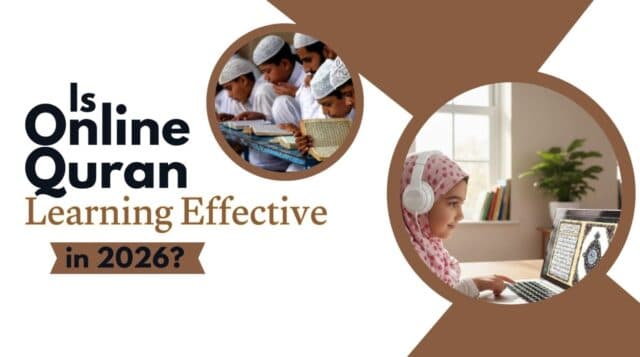
Introduction Let me be honest with you when I first heard about online Quran classes, I was skeptical. Like, genuinely skeptical. My grandmother used to say the Quran has to be learned the old way. Sitting in front of a real Qari, feeling the atmosphere of the madrasa, listening to the correct pronunciation directly from a teacher.
But 2026 has changed the conversation. Online Quran learning is no longer a backup plan. For many families, it is the primary plan. Here is what is actually working.
Today's online classes look very different from what skeptics imagine. Sessions run one-on-one over video call, teachers correct pronunciation in real time, lessons can be recorded for parents to review later, and instructors come from different countries offering everything from Noorani Qaida and Tajweed to memorization, translation, and Islamic studies in sessions of thirty to forty five minutes, daily or a few times a week.
Whether it actually works depends less on the format and more on a handful of specific factors. Consistent, regular sessions with a properly qualified teacher genuinely move the needle on Tajweed and reading fluency. Where things fall short is usually screen fatigue in very young children, or an instructor who claims Tajweed credentials without the training to back it up. The format itself is not the problem; the quality behind it is.
Compared with a traditional madrasa, online learning trades some of the spiritual atmosphere and communal energy for flexible scheduling, access to teachers regardless of where you live, the option of a female instructor, focused one-on-one attention, and often a lower cost. For families living outside Muslim-majority countries in particular, this is not a compromise so much as a genuinely practical alternative.
The common challenges have equally common solutions. Screen fatigue eases when classes are scheduled soon after Fajr rather than late in the evening. Finding a trustworthy teacher comes down to trial sessions and checking credentials rather than trusting a polished profile. Motivation holds up better when progress is tracked against small, specific milestones instead of a vague long-term goal, and results are consistently better when a parent stays involved and reviews sessions from time to time.
If you are evaluating a platform, look for verified teacher qualifications and Ijazah status, take advantage of more than one trial class, confirm the curriculum is genuinely structured rather than improvised, and trust your own sense of whether the teacher is a good fit for your child.
So, is online Quran learning effective in 2026? When the teacher is qualified, the schedule is consistent, and a parent stays reasonably involved, yes, genuinely so. It is not a workaround for families who cannot access a real madrasa. It has become a legitimate, and for many families the more practical, path to learning the Quran properly.