
Islamic Education
Importance of Tajweed in Quran Recitation
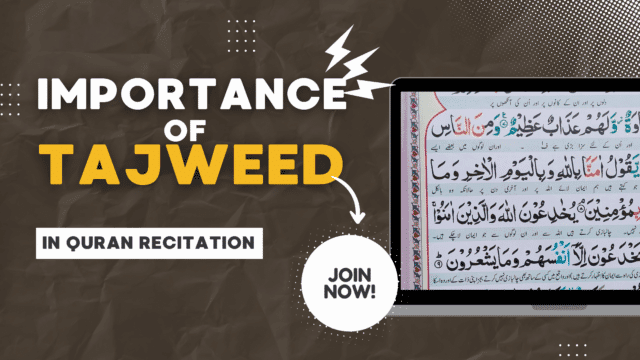
Reading the Quran is not just about words. It is about reading it the way it was revealed. And that is where Tajweed matters. Many people can read the Quran. But not everyone reads it correctly. Small mistakes in pronunciation can change meanings. And that is a serious issue.
This is why learning Tajweed is not optional for anyone who wants to recite the Quran properly. It is a duty. This article explains the importance of Tajweed, its rules, and how it affects the meaning and beauty of Quranic recitation.
At its core, Tajweed means reciting each letter from its correct point of articulation, giving every letter its due characteristics, and following the established rules for elongation and pausing. It is, in short, an attempt to recite the way the Quran was originally revealed and the way the Prophet Muhammad himself recited it, rather than an optional decoration reserved for skilled reciters.
The Quran itself instructs believers to recite with tarteel, a slow and measured recitation, which is precisely what the science of Tajweed exists to teach in practical detail. Getting it right matters for a very concrete reason: Arabic is a precise language, and a single mispronounced letter or misplaced elongation can genuinely change the meaning of a word, turning careless recitation into something that risks distorting the message rather than honoring it.
Beyond protecting meaning, correct Tajweed models the Prophet's own example of clear, deliberate recitation, produces a smoother and more confident reading, and tends to deepen focus during prayer since the reciter is paying closer attention to every word rather than rushing past it. It is also, quite simply, a form of respect, the same instinct that leads a person to handle a cherished book carefully extends naturally to how carefully its words are pronounced.
Beginners usually start with a handful of foundational concepts: Makharij, the specific points in the mouth and throat where each letter originates, Madd, the rules governing how long certain vowel sounds are held, the rules for noon sakinah and tanween, and Qalqalah, a subtle bouncing sound attached to a small set of letters. None of this needs to be mastered overnight. Fifteen to twenty minutes of focused daily practice, ideally with a qualified teacher listening and correcting in real time, is enough to see steady improvement within a matter of weeks, and this guided approach matters even more for non-Arab Muslims encountering these sounds for the first time as adults.
Tajweed is not reserved for scholars, professional reciters, or people who grew up speaking Arabic. It is a responsibility placed on every Muslim who reads the Quran, achievable with patience regardless of age or background, and even a sincere reciter who stumbles through the rules is described in the tradition as earning a reward for the effort itself. Whether you are only just starting with Noorani Qaida or have been reading the Quran for years without formal correction, there is real value in learning Tajweed properly, and it is never too late to begin.