
Islamic Education
How to Learn the Quran with Tajweed: A Complete Guide
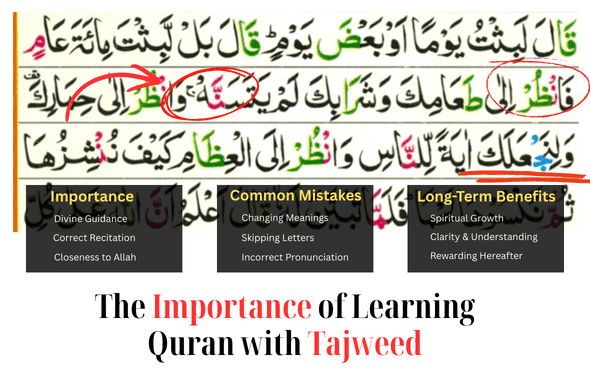
How to Learn the Quran with Tajweed. Introduction. Learning the Quran with Tajweed helps us recite every word as it was revealed. It brings clarity beauty and accuracy to your reading. For many learners Tajweed feels complex at first. But with the right guidance with the help of best teachers it becomes simple and rewarding.
This complete guide takes you through the fundamentals of Tajweed, from Makharij to Madd rules, with practical tips for beginners and intermediate learners.
Tajweed rests on a handful of interlocking concepts, and understanding how they fit together makes the whole subject far less intimidating. Makharij covers the specific points in the mouth, throat, and nasal passage where each letter originates, and getting this right is what prevents similar-sounding letters from being confused with one another. Sifaat describes the individual characteristics each letter carries, things like the light echo of Qalqalah letters, the softness of breathy letters, or the heaviness of certain deep sounds, all of which shape how a letter should actually be voiced.
Madd governs how long certain vowel sounds should be held, creating the rhythm that makes proper recitation sound balanced rather than clipped or dragged out unevenly. Alongside this sit the rules for noon sakinah and tanween, which determine whether a sound is pronounced clearly, merged into the next letter, changed, or softened depending on what follows it, and a nearly identical set of rules applies to meem sakinah as well.
A small set of five letters carry Qalqalah, a distinct bouncing echo when they appear without a vowel, and Arabic letters more broadly split into heavier and lighter categories, a distinction that changes their sound enough to affect meaning if ignored. Waqf, the rules for where and how to pause, rounds this out, since stopping in the wrong place can distort a sentence just as much as mispronouncing a letter would.
Building genuine skill in all of this starts with focused practice on the sounds that do not exist in most other languages, particularly the throat letters and a handful of tongue and lip sounds, alongside a solid grasp of the short vowels and the long vowels that extend them. None of this needs to be tackled all at once; steady, patient practice on one rule at a time produces far better results than trying to absorb everything in a single sitting.
Of the five major articulation zones covering the roughly seventeen distinct points where Arabic letters originate, the tongue produces the largest share of sounds, followed by the throat, the lips, and the nasal passage responsible for the gentle humming quality, or ghunnah, heard on doubled meem and noon sounds. Mastering these points is less about memorizing a chart and more about training your mouth and ear together, ideally under a teacher who can hear the difference between a correct sound and an almost-correct one.
Incorrect articulation does not just sound different, it can genuinely change what a word means, which is exactly why Makharij and the wider rules of Tajweed are treated as essential rather than optional. Learning them properly, with patience and consistent guidance, is what allows a reciter's Quran to sound the way it was always meant to be heard.